Rancilio Silvia review: the machine that makes you a better barista
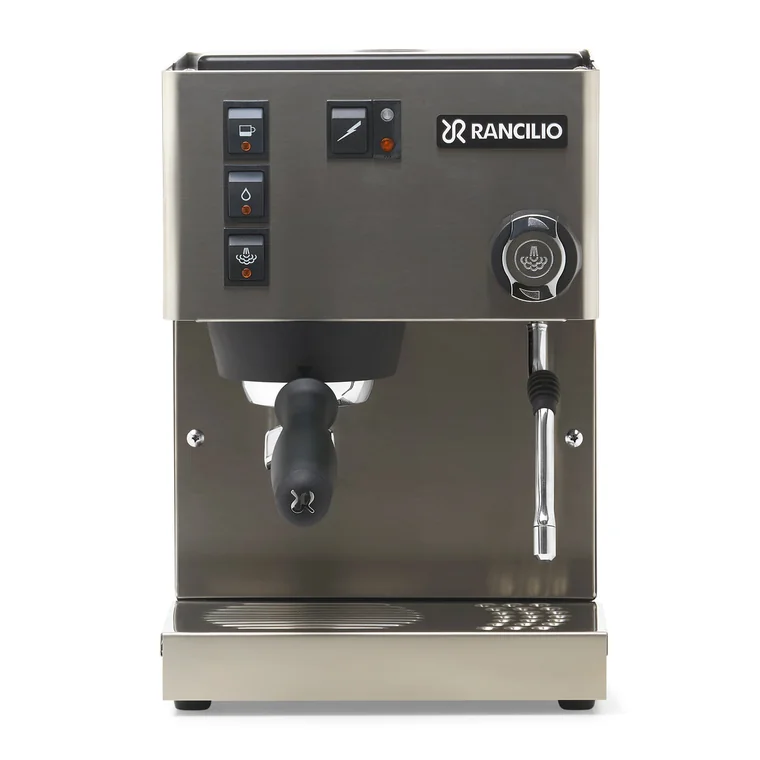
The machine you buy to actually learn espresso. A heavy brass-boiler build with a commercial 58mm portafilter and strong steam, no automation to hide behind. Temperature surfing or a PID mod, a real grinder, and patience turn it into a shot machine for life.
Check price at Rancilio →- Commercial-grade build, lasts decades
- Powerful steam wand
- 58mm commercial portafilter
- Teaches real technique
- Strong resale and parts support
- No PID from the factory (mod or surf)
- Steep learning curve
- No grinder included
- Heavy and basic on features
The Rancilio Silvia is the espresso machine I recommend to people who want to actually learn how espresso works, not just press a button and walk away. At around $895 it is not cheap, and it gives you nothing for free. No grinder, no screen, no PID from the factory, no auto shot timer. What it gives you instead is a commercial-grade build, a real 58mm portafilter and a steam wand that punches above its price. Silvia rewards attention and punishes carelessness, which is exactly why she has been the go-to "learner's machine" for two decades. Here is how she actually pulls, where the learning curve bites, and who should buy something easier.
How the Rancilio Silvia actually pulls a shot
Silvia runs a single brass boiler. Brass holds heat well and holds it steady, which is a big reason this machine feels more planted than the aluminum boiler in a Gaggia Classic Pro. Pair her with a real grinder and a properly distributed, tamped puck in the 58mm portafilter, and the shots come out dense, syrupy and forgiving of small mistakes in a way that lighter, smaller machines are not.
The catch is temperature. Out of the box Silvia has no PID, so the boiler swings between the heating element clicking on and off. Pull a shot at the wrong moment in that cycle and you get a sour, underextracted shot or a harsh, baked one. The old-school fix is temperature surfing: you watch the heating light, flush a little water to land the boiler in the right window, then pull. It works, and once it becomes muscle memory it is genuinely satisfying. But it is a skill you have to build, and your first week of shots will be inconsistent while you learn it.
This is the bargain Silvia strikes. A push button super automatic hands you a drinkable shot on day one. Silvia hands you the tools and the responsibility. Owners who enjoy that find the ceiling here is high. Owners who just want coffee end up resenting the surfing.
The single brass boiler and the no PID question
The factory single boiler does one thing at a time. You brew, then you flip to steam and wait for the boiler to climb to steam temperature, then you steam, then you cool it back down to brew again. For one or two drinks that rhythm is fine. Run a back to back cappuccino round for guests and it slows you down. Brewing and steaming at the same moment means a different machine entirely, the Breville Dual Boiler with its two separate boilers, and it costs a lot more.
About the missing PID: almost everyone who keeps a Silvia eventually adds one. A PID kit holds the brew boiler at a set temperature so you stop temperature surfing and start getting repeatable shots. It is the single most worthwhile mod for this machine. You can absolutely run her stock and surf forever, and plenty of people do, but the stock experience is part of the learning curve, not the finished product. The realistic price of a dialed-in Silvia is the machine plus a grinder plus a likely PID down the line, which puts a stock $895 sticker well past four figures once she is set up the way most owners end up running her; see how much an espresso machine really costs for the full math.
For a deeper look at why temperature stability matters so much, see what to look for in an espresso machine. Silvia and the Breville Dual Boiler both anchor our best prosumer espresso machine guide, if you want to see where she sits against pricier semi-auto rigs.
Steaming milk on Silvia
The steam wand is where Silvia quietly outclasses most home machines near her price. It is powerful. The single articulating wand puts out steam with real pressure, so you can build a proper whirlpool, stretch the milk and pour latte art once your technique is there. After steaming a few hundred pitchers on cafe machines, this is the part of Silvia that felt most familiar to me.
That power cuts both ways for a beginner. A weak wand is slow but hard to mess up. A strong wand like this one will tear your milk to large bubbles in a hurry if you are not watching pitcher angle and steam depth. The upside is that learning on a capable wand makes you a better milk steamer faster, because you are practicing on a tool that behaves like the real thing. Latte and cappuccino drinkers who want to do them well will find this wand a genuine selling point. Want first try foam with no practice? The Magnifica Evo manual frother route or a super automatic is friendlier.
You still need a grinder, and it is not optional
Silvia comes with no grinder. None. Beginners underestimate this, so I will say it plainly: pair her with a real burr grinder or the brass boiler and commercial portafilter are wasted, because every bit of extraction quality is decided at the grind before water ever touches the puck. A shot ground by a cheap blade or an entry level burr unit will taste flat no matter how good the machine under it is. The why behind that, grind size, distribution and how they steer extraction, lives in espresso grind size.
So budget for a quality espresso grinder alongside her from the start, and a decent one starts well into the hundreds. Buyers who cannot stretch to a good grinder on top of the machine are better served by an all in one with a built in grinder like the Breville Barista Express, where the grinder is included and matched to the machine.
Build, reliability and living with her long term
Silvia is heavy, roughly 30 lbs, and you feel it the moment you lift her. The chassis, the brass boiler and the commercial 58mm group are built like gear meant to last. This is the machine's quietest virtue and maybe its strongest argument. People keep Silvias running for ten and fifteen years. Parts are widely available, the design barely changes generation to generation, and a huge community has documented every repair, gasket swap and mod you could need.
Maintenance is ordinary and you should not skip it. Backflush with the included blank as your routine, and descale on a schedule that matches your water, more often with hard water. A neglected boiler is the fastest way to ruin any machine, this one included. See descaling and maintenance for the cadence I use. New to the whole ritual? How to use an espresso machine walks through the basics.
The flip side of all that serviceability is that Silvia expects you to participate. There is no LCD warning you, no automatic anything. That is the deal you are signing up for, and for the right owner it is the appeal.
If you want to check current pricing and bundle options, you can look at the Rancilio Silvia listing here.
Rancilio Silvia vs Gaggia Classic Pro
This is the comparison nearly every Silvia shopper runs into, because both are single boiler manual machines with 58mm commercial portafilters and no built in grinder. They share a philosophy but sit at different price points and different commitment levels.
| Spec | Rancilio Silvia | Gaggia Classic Pro |
|---|---|---|
| Price | Around $895 | Around $450 |
| Boiler | Single brass | Single aluminum |
| Portafilter | 58mm commercial | 58mm commercial |
| Weight | About 30 lbs | About 16 lbs |
| Baskets | Non pressurized | Pressurized and non pressurized included |
| PID from factory | No (popular mod) | No |
| Grinder | None | None |
The Gaggia is the cheaper entry point and a famous modding platform, and its included pressurized basket gives a beginner an easier on ramp before they graduate to the non pressurized one. The Silvia costs roughly twice as much and earns it with a brass boiler that holds temperature more steadily, a heavier commercial build and a stronger steam wand. Tight budget shoppers should start with the Gaggia Classic Pro. Shoppers who want the more substantial machine and are committed to learning the craft should step up to Silvia. I break the duel down further in Gaggia Classic vs Rancilio Silvia.
Either way a real grinder is non negotiable, so look at both machines through that lens. Comparing prices on the Silvia and the Gaggia side by side is worth doing before you commit.
Who should buy the Rancilio Silvia, and who should not
Picture the buyer Silvia is built for: someone who already owns or is budgeting for a quality grinder, who wants to learn espresso properly, and who finds the hands on ritual rewarding rather than annoying. That person gets a machine that will still be on the counter in a decade and a strong wand that doubles as a milk-steaming teacher. For them, Silvia is one of the best machines you can buy.
She is the wrong machine if convenience, day-one consistency or a low total cost is what you are after. Press-a-button-and-walk-away coffee drinkers should get a super automatic and feel no shame about it. Anyone who wants espresso quality without separately sourcing a grinder should get an all in one like the Barista Express. On a genuinely tight budget, the budget pick or the cheaper Gaggia gets you into the same single boiler world for less. Silvia is a deliberate choice for people who want to do the work, and she rewards exactly that.
Check current pricing and any bundle deals from a trusted espresso retailer. Prices move with sales.
Affiliate link. We may earn a commission at no extra cost to you. It never changes our rankings (see how we test). We pull real shots before we recommend a machine.
Frequently asked questions
Does the Rancilio Silvia come with a grinder?
No. The Silvia has no built in grinder, so a separate quality espresso grinder is essential. Plan on roughly $895 for the machine plus a good grinder that starts well into the hundreds. A cheap grinder will hold back even this commercial grade machine, so do not skimp on it. See espresso grind size for why the grind decides the shot.
Do I need to add a PID to the Rancilio Silvia?
You do not need one, but most long term owners add it. Stock, the single boiler has no temperature control, so you temperature surf by watching the heating light and flushing to land the right window. A PID holds the brew temperature steady for repeatable shots and is the single most worthwhile mod. Stock surfing works fine once you learn it.
Is the Rancilio Silvia good for beginners?
It is good for beginners who want to learn the craft and enjoy a hands on process, not for people who want easy coffee. There is no grinder, no PID and no automation, so your first shots will be inconsistent while you learn temperature surfing and dialing in. Anyone who wants convenience instead is better off with a super automatic or an all in one with a grinder.
Rancilio Silvia or Gaggia Classic Pro?
Both are single boiler manual machines with 58mm portafilters and no grinder. The Gaggia costs around $450 and includes a beginner friendly pressurized basket. The Silvia costs around $895 and adds a brass boiler that holds heat more steadily, a heavier build and a stronger steam wand. Start with the Gaggia on a tight budget, step up to Silvia if you are committed.
How long does a Rancilio Silvia last?
A well maintained Silvia commonly runs ten to fifteen years or more. The heavy commercial grade build, brass boiler and widely available parts make her one of the more repairable home machines. Backflush regularly, descale on a schedule that matches your water hardness, and replace gaskets as needed, and she will keep pulling shots for a very long time.
I pulled shots behind a bar for years and now obsess over home espresso. I own and tear down these machines and write every review and guide here. I rank by what makes good coffee, not by who pays the most. How we test →