De'Longhi Magnifica Evo review: the honest bean-to-cup test
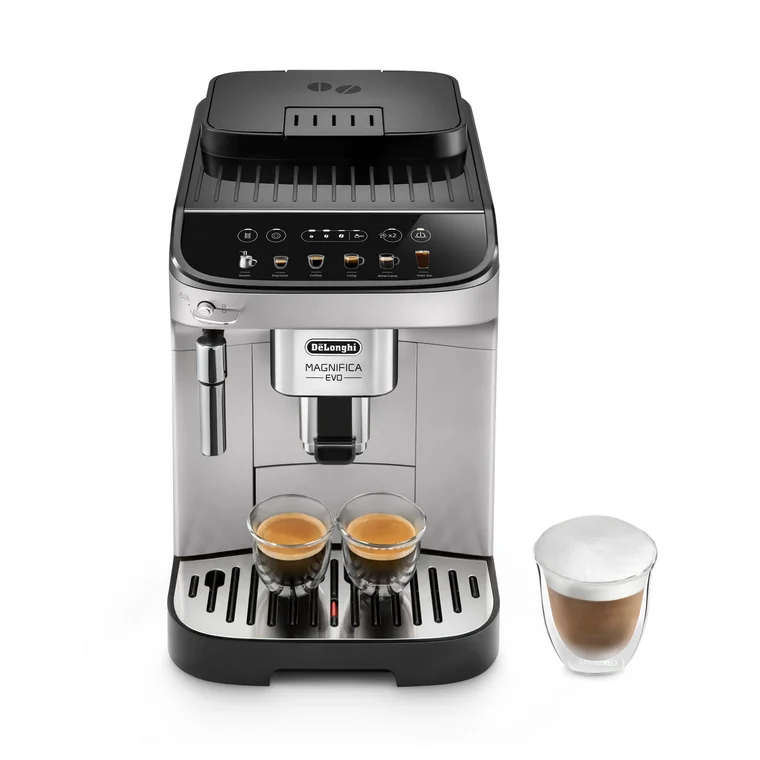
Good coffee with zero technique. Beans in, button pressed, six drinks out, with a built-in grinder and adjustable strength. You trade the control and peak quality of a semi-auto for genuine convenience, which for a busy household is exactly the right trade.
Check price at De Longhi →- One-touch, no skill required
- Built-in grinder, 13 settings
- 6 drinks including milk options
- Adjustable strength and volume
- Self-rinsing, low fuss
- Espresso quality below a good semi-auto
- Manual milk frother on this model
- Less control over the shot
- Plastic-heavy build
I have pulled thousands of shots on semi-automatic machines, and I still keep a super-automatic on the counter for the mornings I do not want to think. The De'Longhi Magnifica Evo (ECAM29043SB) is the machine I point most people toward when they tell me they want espresso but never want to touch a portafilter. At around $700 it does something genuinely useful: you load whole beans, press a button, and walk away with a cup. The convenience is real, and so is the trade you make to get it. Below is what the Magnifica Evo gives you, where it falls short of a good semi-auto, and the kind of drinker who should buy one instead of fighting with a grinder and a tamper.
How the Magnifica Evo actually makes a cup
Drop whole beans in the top hopper, fill the 60 oz-ish water tank, choose a drink, and the machine handles the rest. The integrated conical burr grinder doses and grinds for each cup on demand, the puck gets tamped and brewed inside a sealed brew unit, and the spent grounds drop into an internal bin that you empty every dozen or so shots. You never see the coffee, never tamp, never knock out a puck. That is the whole pitch of bean-to-cup, and the Evo delivers it cleanly.
Thirteen grind settings give you more range than a machine at this price usually bothers with. You adjust the grinder while the beans are running, not stopped, and it takes a few shots to settle in after a change. Against the older Magnifica line, the Evo grinds a touch finer and more consistently, which is the single biggest reason a cup tastes better here than on a cheap pod machine. You are getting real ground coffee extracted under pressure, not a sealed capsule.
Flavor-wise, expect clean, sweet enough, a little flat next to a dialed-in semi-auto. The brew unit gives every cup the same dose and tamp, so you trade the ceiling of a great manual shot for a floor that is hard to mess up. For most people drinking milk drinks, that floor is exactly where they want to live.
The six one-touch drinks and what they really do
The ECAM29043SB has six programmed beverages: espresso, coffee (a longer American-style cup), latte, latte macchiato, cappuccino, and hot water. You can adjust strength and volume on each and the machine remembers your preference, so once you set your morning latte it repeats it the same way every day. Repeatability is the underrated joy of a super-auto. A semi-auto only repeats if your technique does.
One caveat before you assume "one-touch" means the milk too: the drinks on this specific model are not fully hands-off. This is the manual frother version, which I cover below. The button-press automation lives on the coffee side. The grinder, the dose, the brew, the volume, the strength, all automatic. The milk is on you.
| What you control | How |
|---|---|
| Grind, dose, tamp, brew | Fully automatic, every cup |
| Strength and volume | Adjustable, saved per drink |
| Milk texture | Manual, you steam and pour yourself |
The manual frother: what it is and what it is not
This is the part people get wrong when they shop. The Magnifica Evo comes in different milk configurations, and the ECAM29043SB ships with a manual milk frother, not the automatic LatteCrema carafe system you see on pricier De'Longhi models. The manual frother is a panarello-style wand: you put the tip in a pitcher of cold milk, turn it on, and it pulls in air and steam to make foam.
It works, and it is forgiving, but do not expect latte-art microfoam. You get warm, airy, slightly bubbly milk that is great for a cappuccino and fine for a latte. Texturing silky milk is a job for a semi-auto with a proper steam wand and some practice. So if a fully automatic, one-button cappuccino with the carafe doing the milk is the dream, the LatteCrema models are what you actually want, and that is worth knowing before you buy. On the manual frother model, the milk is the one chore that stays manual.
For a lot of buyers that is fine. The coffee is automatic, the milk takes ten seconds, and you can wipe the wand and move on. Just buy it knowing the milk is hands-on work on an otherwise hands-off machine.
What the convenience costs you in quality and control
My reviewer's verdict on the Evo specifically: the sealed brew unit caps how good its espresso gets, because it locks the dose and tamp out of your hands and you cannot push a true low-ratio ristretto or stretch a long extraction the way you can on a manual machine. If you want the full reasoning behind that ceiling, the deeper case sits in our guide on semi-automatic versus super-automatic machines.
What it means in the cup: consistently good, rarely great. Taste a properly dialed shot from a Breville Barista Express or a modded Gaggia Classic Pro paired with a quality grinder, and the Evo reads as a step down in body and clarity. That is not a knock. It is the deal you sign when you buy a super-auto, paying for time saved every single morning rather than the top of the flavor curve.
If that ceiling matters to you, look at what actually separates a good espresso machine from a frustrating one so you buy on the right priorities. The one most people underweight is the grinder, and the Evo at least has a decent one built in, which is more than you can say for any boilerless semi-auto at this price.
Living with it: maintenance, reliability, and daily reality
Day to day, the Evo is low-drama. The removable brew unit pops out and rinses under the tap, a design De'Longhi has done well for years and a big reason these machines stay healthy. Rinse the brew unit weekly, empty the grounds bin and drip tray regularly, and clean the milk wand after every use, because dried milk is what kills frothers.
Descaling is the one job you cannot skip, and the machine will nag you for it. Mineral buildup is the slow killer on any espresso machine, so follow a schedule. Our descaling and maintenance guide walks through it. Keep the routine and these De'Longhi units are known to run for years. Drop it and you become the person posting that their machine died at eighteen months. Everything I claim about durability here comes from the same hands-on routine I run on every machine, laid out in how we test these machines.
A practical note on beans: feed it medium to medium-dark, fresh, and not too oily. Very oily dark roasts gum up the grinder and brew unit on any super-auto. When a cup tastes thin, nudge the grind finer and bump the strength setting before you blame the machine. For why grind drives so much of the result, our espresso grind size guide applies even on a machine that grinds for you.
Who should buy the Magnifica Evo, and who should not
This machine is for the drinker who wants espresso and milk drinks at home with the least possible effort, makes several cups a day, and would rather walk away from the counter than chase a perfect shot. It also suits a busy household where different people want different drinks at different strengths, because the per-drink memory handles that without anyone learning a thing. At around $700 it is priced right against an all-in-one semi-auto, and you can check the current De'Longhi price to see where it lands today.
Skip it if you are a tinkerer or you want real latte-art microfoam, because you will outgrow it and resent it. Anyone who suspects they will fall down the espresso rabbit hole is better served by a Gaggia Classic Pro plus a real grinder, or a Barista Express if you want the grinder built in. Both reward practice far more over time. New to all of this? Start with our best espresso machines for beginners, and when convenience is the whole point, the best super-automatic roundup puts the Evo in context against its rivals. You can also see the Magnifica Evo specs and pricing directly.
The Evo is exactly what it claims to be: a press-a-button machine that makes a respectable cup without asking anything of you except the occasional descale and a quick milk steam. Buy it understanding that trade and it is an easy machine to be happy with.
Check current pricing and any bundle deals from a trusted espresso retailer. Prices move with sales.
Affiliate link. We may earn a commission at no extra cost to you. It never changes our rankings (see how we test). We pull real shots before we recommend a machine.
Frequently asked questions
Does the De'Longhi Magnifica Evo make real espresso?
Yes. It grinds whole beans on demand with an integrated conical burr grinder, tamps inside a sealed brew unit, and extracts under pump pressure, so you get genuine espresso, not a pod. The cup lands consistently good rather than great. You trade the control and flavor ceiling of a dialed-in semi-auto for press-button repeatability every morning.
Is the milk frother on the Evo automatic?
On the ECAM29043SB it is a manual frother, a panarello-style wand, not the automatic LatteCrema carafe. The coffee side is one-touch, but you steam and pour the milk yourself. It makes good cappuccino foam and fine latte milk, though not silky latte-art microfoam. For fully hands-off milk, look at De'Longhi's LatteCrema models instead.
How does the Magnifica Evo compare to a Breville Barista Express?
Different philosophies at a similar price. The Evo is a super-automatic that does everything for you, while the Barista Express is a semi-auto that lets you control grind, dose, tamp, and steam for a better shot. The Breville rewards practice with more flavor and latte-art milk. The Evo rewards you with time and zero learning curve. Choose based on effort versus quality.
How much maintenance does the Magnifica Evo need?
Less than you might fear. The brew unit removes and rinses under the tap, you empty the grounds bin and drip tray regularly, and you clean the milk wand after each use. Descaling on schedule is the one job that determines how long it lasts. Keep the routine and these machines reliably run for years. Avoid very oily dark roasts that clog the grinder.
Who should not buy a super-automatic like the Evo?
Tinkerers, latte-art chasers, and anyone likely to fall deep into espresso as a hobby. A super-auto's sealed brew unit fixes the dose and tamp, so you cannot chase a specific shot the way you can by hand. When maximum cup quality and control matter more than convenience, a semi-auto like the Gaggia Classic Pro or Rancilio Silvia, paired with a good grinder, is the better long-term buy.
I pulled shots behind a bar for years and now obsess over home espresso. I own and tear down these machines and write every review and guide here. I rank by what makes good coffee, not by who pays the most. How we test →