Gaggia Classic Pro review: the value machine people keep for a decade
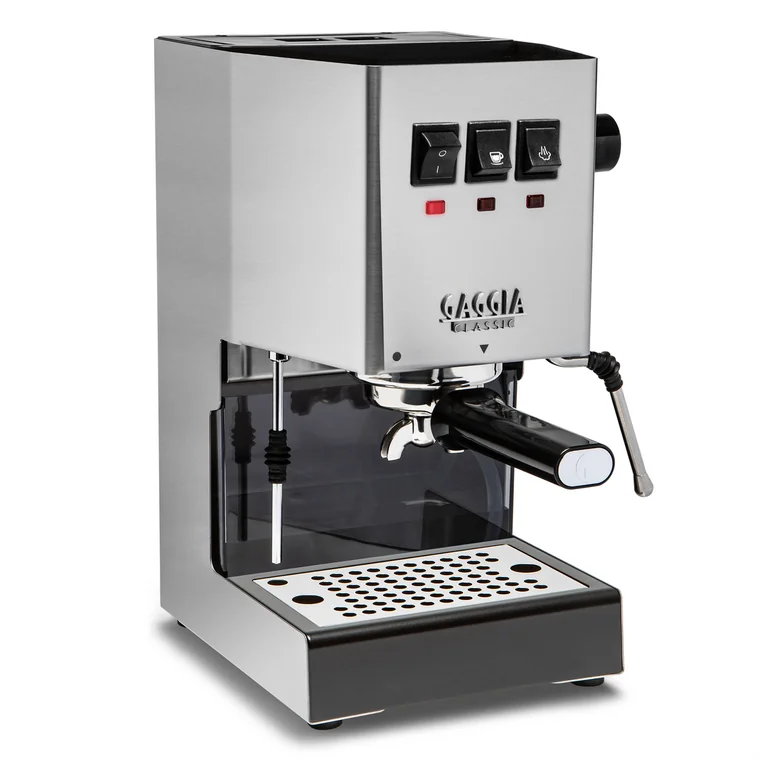
The value legend. A 58mm commercial portafilter and a tank-tough body for around $450, with pressurized baskets to learn on and a famous modding scene to grow into. You will need a grinder, which is the real cost, but nothing else gets you here for less.
Check price at Gaggia →- 58mm commercial portafilter at the price
- Pressurized baskets ease the start
- Endless mods (PID, OPV, and more)
- Simple and repairable
- Small footprint
- No grinder, a real added cost
- Single boiler, wait to steam
- No PID from the factory
- Steam is adequate, not strong
The Gaggia Classic Pro is the machine I point people to when they tell me they want to actually learn espresso without lighting $1,000 on fire to find out if they like it. It is a stubborn little aluminum box that has barely changed in twenty years, and that is exactly the point. At around $450 it gives you a real 58mm commercial portafilter, a 15-bar pump, and a manual steam wand, with nothing automated to hide behind. You pull the shot. You steam the milk. When it goes wrong, the fault is yours, and that is how you get good.
How it actually pulls a shot
The Classic Pro is a single aluminum boiler machine, which means it does one job at a time: brew, then switch to steam. You flip the brew switch, the pump kicks in at 15 bar, and water runs through the puck in the 58mm portafilter. That portafilter is the headline here. It is full commercial size and weight, the same diameter you find on machines costing three and four times as much, so the muscle memory and the accessories you build around it carry forward for life.
Out of the box the shot is honest but unremarkable, and that is normal. There is no PID from the factory, so brew temperature is governed by a thermostat that cycles around a setpoint rather than holding a precise number. The workaround is temperature surfing: you wait for the heating light, flush a little water, and time your shot to land in the sweet spot. It sounds fiddly written down. After a week it is second nature, and the shots get genuinely good, thick crema, syrupy body, the kind of espresso that makes you stop buying it out.
Where this machine rewards you is consistency of input. Dose the same, tamp the same, grind the same, and the Classic Pro will hand you the same shot every time. It does not flatter sloppy technique, but it does not punish good technique either. For roughly $450 that is a remarkable amount of real control.
The two baskets: start pressurized, then graduate
This is the part most reviews skip, and it matters more than any spec. The Gaggia Classic Pro ships with both pressurized and non-pressurized baskets, and which one you load changes everything about your early weeks.
Start on the pressurized basket: its single restricted hole props up crema and shrugs off rough grind, so even pre-ground supermarket coffee comes out looking like espresso while you get comfortable with the machine and the steam wand. Just know it is a starter mode with a low ceiling, because it is propping up your variables rather than letting you steer them.
The non-pressurized basket is the real one. It is a true commercial-style basket with dozens of tiny holes, and it demands a proper grind, a level dose, and a firm even tamp. Get those right and the flavor jumps to another league: more clarity, more sweetness, more of what the coffee actually tastes like. The catch is you cannot fake it. Channeling, gushers, and sour under-extracted shots will all show up until your technique and your grinder are dialed. Graduating from the pressurized to the non-pressurized basket is the single biggest quality leap you will make on this machine, and you can take it at your own pace.
You need a grinder, and it is part of the real budget
Here is where people get burned. With this no-grinder machine, a real burr grinder is what makes the non-pressurized basket worth owning, and pairing the Classic Pro with a blade grinder or pre-ground coffee throws away most of what you paid for. Our guide to espresso grind size walks through why the grind, not the boiler, decides how the shot tastes and exactly what you are dialing toward.
So when you budget for a Classic Pro, budget for a grinder in the same breath. A solid entry-level espresso burr grinder is the difference between frustration and great coffee, and it is honestly where I would spend my next dollar before any machine upgrade. If you would rather not buy two boxes, our best espresso machine with a grinder roundup covers the all-in-one alternative.
That second box is why the sticker price lies a little. The machine is $450, but a Classic Pro plus a grinder you will not outgrow in a month realistically lands in the $700 to $900 range, still a fantastic deal for the espresso it makes once you go in expecting it. We break down the wider picture in how much an espresso machine really costs.
Steaming milk and the manual wand
The steam wand is manual, single-hole on the Pro, and it is better than the previous Classic generation. Because this is a single boiler, you brew first and then flip to steam mode and wait for the machine to come up to steam temperature, maybe 30 to 40 seconds. There is a short routine to it, but it is simple once it is habit.
The steam is plenty powerful for a home setup. Once you learn to angle the pitcher and listen for the right paper-tearing whisper at the start of the stretch, this machine will produce genuinely good microfoam, glossy and tight enough for real latte art with practice. It will not steam and brew at the same time the way a dual boiler does, so back-to-back milk drinks for a crowd take patience. For one or two people pulling a couple of cappuccinos a morning, the workflow is fine. Serving milk drinks for a full table is where a second boiler pays off, and our beginner espresso machine guide covers those trade-offs.
The modding scene and long-term ownership
Half the reason people love the Gaggia Classic Pro is what it becomes once you start tinkering. It is the most-modded home espresso machine on the planet, and the parts are cheap, accessible, and well documented. The two upgrades people reach for most are a PID controller, which replaces that cycling thermostat with precise temperature control and basically erases the need to temperature surf, and an OPV (over-pressure valve) adjustment, which dials the brew pressure down from the factory setting toward the gentler 9-bar range that many baristas prefer for extraction. People also swap in better steam tips, bottomless portafilters for diagnosing channeling, and quieter pumps.
None of this is required. A stock Classic Pro makes excellent coffee if you leave it alone forever. But the upgrade path is part of the value: you can buy it at $450, learn on it for a year, then spend $50 on a PID and end up with a machine that performs well beyond its price, all with a screwdriver and an afternoon. It is no accident that our prosumer espresso machine roundup sends budget-minded readers here first, because a PID-modded Classic Pro is the cheapest honest on-ramp to that world.
On reliability, this machine is a workhorse. At about 16 lbs it is light compared to a Rancilio, but the build is simple, the parts are everywhere, and there is a deep community that has documented every possible fix. Routine maintenance is undemanding: backflush regularly, keep the group head and basket clean, and descale on schedule. Skipping descaling is the number one killer of any espresso machine, and our descaling and maintenance guide keeps yours running for the long haul. Treat it right and a Classic Pro is the kind of machine you hand down rather than throw out. You can check current pricing and the bundle options over at Whole Latte Love.
Gaggia Classic Pro vs Rancilio Silvia
This is the comparison everyone in this price tier wrestles with, so here is the straight breakdown. Both are single-boiler, no-grinder, manual, 58mm semi-automatic machines aimed at the person who wants to learn the craft. They overlap hard, and there is no wrong answer.
| Spec | Gaggia Classic Pro | Rancilio Silvia |
|---|---|---|
| Price | Around $450 | Around $895 |
| Boiler | Single aluminum | Single brass |
| Portafilter | 58mm commercial | 58mm commercial |
| Weight | About 16 lbs | About 30 lbs |
| Grinder | None | None |
| Baskets included | Pressurized and non-pressurized | Commercial-style |
The Silvia is the heavier, more thermally stable machine. That big brass boiler holds temperature more steadily, the build feels like a small commercial unit, and many enthusiasts feel it has a slightly higher ceiling once dialed in. You pay for it, both in money (roughly double) and in weight on your counter. The Classic Pro counters with value, the friendlier pressurized-basket on-ramp for true beginners, an even deeper modding community, and a much lower entry price that leaves room in the budget for the grinder that actually matters. Where do I land? If money is tight or you are brand new, the Classic Pro is the smarter buy, and you will not feel short-changed. If you want the most solid single boiler you can get short of prosumer money and you plan to keep it forever, the Silvia earns its premium. We go deeper in the Gaggia Classic vs Rancilio Silvia comparison and the full Rancilio Silvia review.
Who it is for, and who should skip it
Picture the person this machine is built for: someone who genuinely wants to learn espresso, enjoys having a hand on every part of the shot, and is happy to set a quality grinder next to it. That covers the curious beginner who wants a real machine instead of a toy, the tinkerer who likes the idea of upgrading over time, and anyone who values build-it-yourself value over push-button speed. At $450 it is the best on-ramp to real espresso there is, which is why it sits at the top of our top budget espresso machine pick.
Two kinds of buyer should walk away. If you want a cup at the press of a button with no learning curve, a super-automatic like the De'Longhi Magnifica Evo grinds, brews, and froths in one touch, trading espresso quality and control for pure convenience. And if you like the Breville idea of a quality machine with a grinder already built in, the Breville Barista Express is the obvious cross-shop, covered head to head in our semi-automatic vs super-automatic breakdown. Still mapping the categories before you commit? Our guide to what to look for in an espresso machine covers boilers, portafilter size, and the features worth paying for.
Check current pricing and any bundle deals from a trusted espresso retailer. Prices move with sales.
Affiliate link. We may earn a commission at no extra cost to you. It never changes our rankings (see how we test). We pull real shots before we recommend a machine.
Frequently asked questions
Does the Gaggia Classic Pro come with a grinder?
No. The Classic Pro has no built-in grinder, and a quality separate burr grinder is essential rather than something you add later, especially with the non-pressurized basket. Budget for one in the same breath as the machine. A realistic setup with a grinder you will not outgrow lands closer to $700 to $900, even though the machine itself is around $450.
Should I use the pressurized or non-pressurized basket?
Start with the pressurized basket. It forgives grind and tamping mistakes and even works with pre-ground coffee, so you can learn the machine without fighting a grinder too. Once your grinder and technique are dialed in, graduate to the non-pressurized basket. That is the single biggest quality leap on this machine, since it lets you control the shot instead of masking it.
What is the difference between the Gaggia Classic Pro and the Rancilio Silvia?
Both are single-boiler, no-grinder, 58mm manual machines for learning espresso. The Silvia (around $895) has a heavier brass boiler with steadier temperature and a near-commercial build at about 30 lbs. The Classic Pro (around $450) is lighter aluminum, includes a beginner-friendly pressurized basket, and costs roughly half, leaving budget for a grinder. For value and first-time buyers, the Gaggia wins.
What mods are worth doing on the Gaggia Classic Pro?
The two most popular are adding a PID controller for precise brew temperature, which removes the need to temperature surf, and adjusting the OPV to bring brew pressure toward 9 bar for gentler extraction. Many owners also add a bottomless portafilter to diagnose channeling. None are required for great coffee, but the cheap, well-documented upgrade path is a big part of this machine's appeal.
Can the Gaggia Classic Pro make lattes and cappuccinos?
Yes. The manual steam wand produces genuinely good microfoam once you learn to angle the pitcher and stretch the milk. Because it is a single boiler, you brew first, then switch to steam and wait about 30 to 40 seconds, so you cannot brew and steam at the same time. That is fine for one or two milk drinks a morning, but slow if you are serving a full table.

I pulled shots behind a bar for years and now obsess over home espresso. I own and tear down these machines and write every review and guide here. I rank by what makes good coffee, not by who pays the most. How we test →